 Wine Tasting Firenze
How a Tuscan Wine Tasting Works
Last reviewed August 2026
Wine tasting etiquette in Italy is far lighter than the phrase suggests than the phrase suggests, and knowing the shape of the hour removes the only real anxiety a first-timer has. Someone pours small measures in a fixed order, explains each one, and puts bread, olive oil, pecorino and salami on the table to go with them. Swirling is optional, spitting is normal at a working cellar and rare on a group day, and asking questions is the part most people pay for and then skip. This page covers the sequence, the vocabulary and where to have your first one among the wine tastings in Florence we compare.
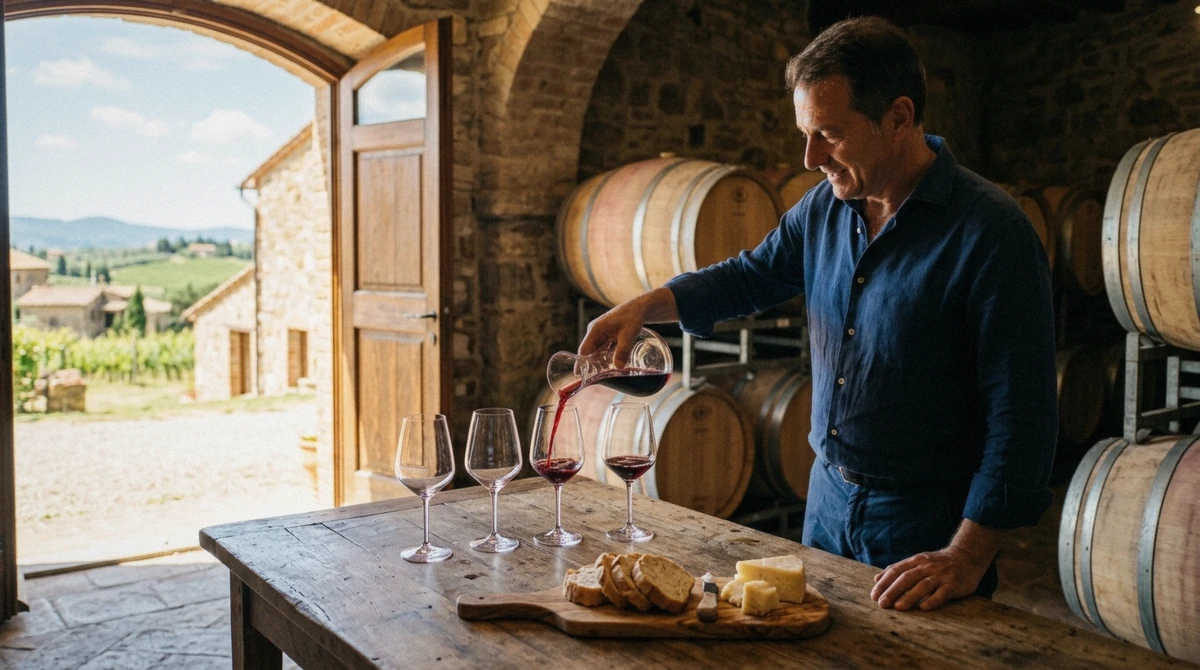
Quick answer What actually happens at the table, what to say, and the three things nobody minds you doing
A Tuscan tasting is less formal than the word suggests. Someone pours two to seven small measures in a fixed order, tells you what each one is, and expects you to drink, ask questions and eat the bread and pecorino in front of you. Nobody is testing you. Swirling is optional, spitting is normal on a working estate and unusual on a group tour, and asking for water is the most experienced thing you can do. The one rule worth learning is the order: light to heavy, young to old, dry before sweet.
Key takeaways
- Pours are small on purpose, and finishing every glass is not the goal
- Two minutes on what Annata, Riserva and Gran Selezione mean changes the whole flight
- Spitting is normal at a working cellar; on the group half-days almost nobody does
- The food is part of the tasting, not a snack: the salami and pecorino are there to change the wine
- Buying is never obligatory, and no host on our listings works on commission from your case
- First time out? The one-hour city cellar tasting is the gentlest place to start
What Happens at a Tasting, Step by Step
The shape of the hour
In a vaulted room in Florence or a cellar in Chianti, the sequence is the same and it rarely varies. Knowing it removes the only real source of first-timer anxiety, which is not knowing what is about to be asked of you.
| Stage | What happens | What is expected of you |
|---|---|---|
| Welcome | The host explains the estate or the cellar, usually five minutes | Nothing. Listen, or look at the barrels |
| The pour | A small measure, one wine at a time, in a fixed order | Take the glass by the stem if you remember; nobody minds if you do not |
| The description | What the wine is, the grape, the ageing, sometimes the vintage | Ask what you like. This is the part people pay for and then waste |
| The food | Bread, olive oil, pecorino, salami arrive with or between the wines | Eat it. The pairing is the point, and it slows the alcohol down |
| Between wines | Water, and often a plain cracker | Drink the water. Every experienced taster does |
| The end | The cellar shop, or the bus | Buy if you want to. There is no obligation and no pressure worth minding |
The order is the lesson
Wines come at you light to heavy, young to old, dry before sweet, and that order is doing the teaching. An entry-level Chianti Classico first, matured 12 months, a Riserva after it at 24, a Gran Selezione or a cellar selection third at 30, and a Vin Santo at the end if the estate makes one.
That sequence is why tasting five wines teaches more than drinking five glasses of the same one. The comparison is the content. If you remember one thing from this page, make it this: taste them in the order given, and try the first one again at the end if there is any left in the glass.
What to Do, and What Nobody Cares About
Things that are entirely fine
- Not finishing a glass. Pours are small so that you can taste several, not drink several
- Asking for water, and asking again
- Saying you do not like one. Hosts prefer an honest reaction to a polite nod
- Skipping the swirl. It aerates the wine, it is not a competence test
- Asking the price before deciding whether to buy
- Taking a photo of the label so you can find it at home
- Eating all the bread and pecorino. It is there to be eaten
Things worth avoiding
- Strong perfume or aftershave, which affects everyone at the table and not only you
- Turning up hungry to a five-hour day where lunch is not included, which is how a tasting becomes an incident
- Filling your own glass from the bottle on the table unless invited
- Treating the host as a sommelier examiner. On the group circuit they are often winery staff, and the questions they answer best are practical ones
- Asking for the most expensive wine to be opened for a group tasting. It will not be, and everyone knows why
Spitting, and whether you should
At a professional tasting, spitting is standard and a bucket is on the table. At a working Chianti estate, using it is normal and nobody blinks.
On a group half-day from Florence with six to eight pours, almost nobody spits and there is often no bucket in sight. That is fine, and it also means the arithmetic matters: six small pours is roughly two glasses of wine across an afternoon, more if the host is generous. If you are driving afterwards, the driving rules are not a formality, and if you are riding a Vespa, the operator can stop you outright.
What the host is actually doing
It helps to know who is on the other side of the table, because the group circuit and a small estate are different jobs.
On a coach half-day, where a group can run to 50 people, the person pouring is usually winery staff working the same script three or four times a day. They are good at it, they know the estate, and the questions they answer best are concrete: what the ageing is, which way the vineyard faces, what to eat this with. On a small-group trip or a booked estate visit you may get the winemaker or a sommelier, and the conversation goes deeper if you push it.
Neither of them is grading your palate. The most useful adjustment a first-timer can make is to stop performing appreciation and start asking about the work.
Pacing, Food and the Thing That Ruins Tastings
Six pours is more wine than it looks
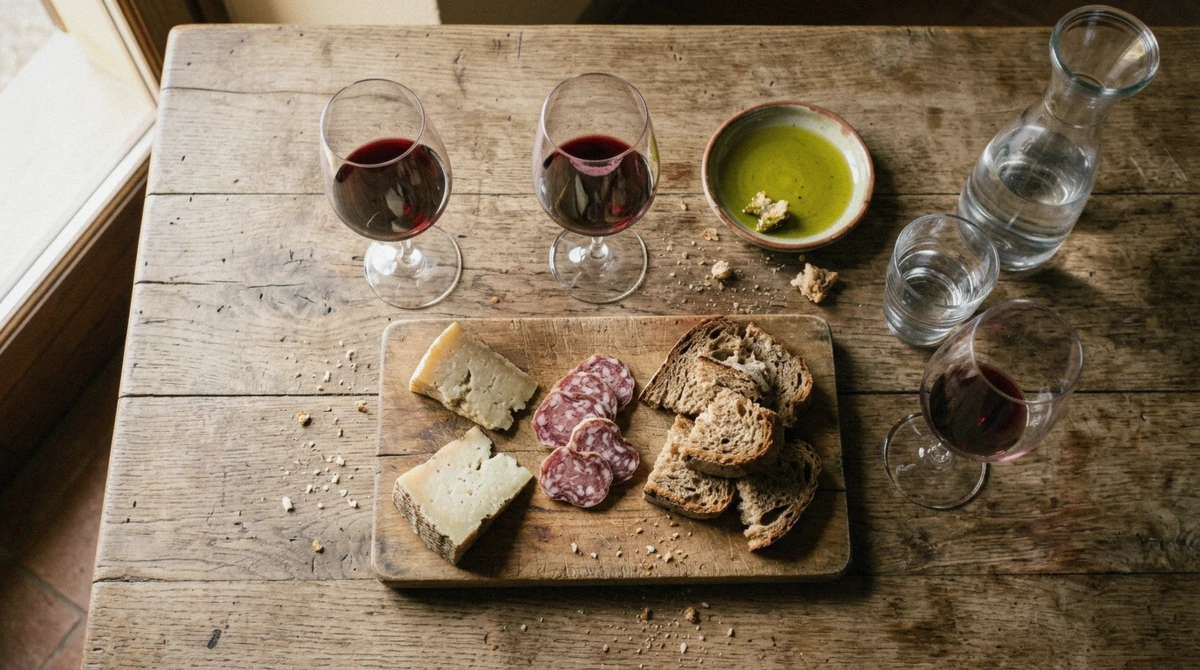
A tasting measure is roughly 40 to 50 millilitres, about a third of a 150 ml restaurant pour, which is why a listing can promise seven wines without promising a hangover. Six to eight pours across an afternoon works out at about two to three glasses, spread over four or five hours and taken with food.
That sounds modest, and it is, provided two things happen. The food gets eaten, and water gets drunk between the wines. The single most common way a Chianti day goes wrong is a traveller who skipped breakfast, treated the bread and pecorino as decoration, and met the third pour on an empty stomach at eleven in the morning.
Lunch is not included on most half-days, which makes this worse than it sounds. On the listings that do include a meal, the pacing takes care of itself.
The heat factor nobody mentions
In July and August, when Florence averages 32 degrees against 24 in May and 16 in November, the same amount of wine hits differently. Cellars are cool, the transfers are air conditioned, and the free time between them is not. If you are visiting in high summer, either take an evening departure or keep the tasting inside the city, which the seasons guide sets out month by month.
The practical version of all of this: eat first, drink the water, and take the fourth pour slower than the first.
What to Say, If You Want to Say Something
Four questions that always get a good answer
You do not have to describe the wine. If you want to engage rather than nod, ask about the work instead of the flavour, because the person pouring knows the work and may not be a taster by trade.
| Ask this | Why it works | What you learn |
|---|---|---|
| What changed between this one and the last? | It uses the order the host chose | The ageing, the vineyard or the selection behind the tier |
| Which of these do you drink at home? | Nobody's marketing answer is the same as their own bottle | Usually the entry wine, and honestly why |
| How did this vintage go here? | Growers talk about weather the way sailors do | Whether the year was hot, wet or balanced, and what it did |
| What do you eat this with? | Tuscan wine is built for Tuscan food | A pairing that works better than anything a menu will suggest |
And what the words on the label mean
Two minutes of vocabulary makes the rest of the day legible. Chianti Classico comes in three tiers, defined by the consortium: Annata matures at least twelve months, Riserva at least twenty-four, and Gran Selezione at least thirty with a ninety percent Sangiovese minimum and estate-grown grapes only. The Black Rooster on the neck is the consortium's mark, and 11 named zones may appear only on that top tier.
If a flight puts all three in front of you, that is the whole point of it: one grape, one set of hills, three amounts of patience. The tier explainer has the numbers, and it is worth reading on the bus.
Where to Have Your First Tasting
If You want a gentle, guided introduction
The one-hour cellar tasting in Florence: three or seven wines, seated, with food
If You want to see a cellar and the vines
The 4.5-hour small-group trip to two estates, back in time for dinner
If You are nervous about looking clueless
Pick a small group over a coach: questions get answered and nobody performs
If You want to learn the tiers properly
Ask for the flight in order and read the tier explainer first
If You are not sure you even like red wine
Start with a glass at a wine window or an enoteca for a few euro, per the map post
First-Timer Questions
How does a wine tasting in Tuscany work?
A host pours small measures in a fixed order, light to heavy and dry before sweet, explaining each wine as it arrives, with bread, olive oil, pecorino and salami alongside. It usually runs one to two hours at an estate, or an hour in a Florence cellar.
Do I have to spit the wine out?
No. Spitting is standard at professional tastings and normal at a working estate, but on a group day from Florence almost nobody does. Pours are small enough that six of them amount to about two glasses.
Is it rude not to finish a glass?
Not at all. Leaving wine in the glass is expected in a tasting, and finishing everything is the surer way to lose the thread of the flight.
Am I expected to buy wine at the end?
No. Estates sell what they pour and shipping is usually offered, but there is no obligation and no host on these listings depends on your order.
What should I wear to a wine tasting in Chianti?
Whatever you would wear for a day out, with closed shoes for the cellar and the gravel. Skip strong perfume, which affects everyone at the table.
How much wine will I actually drink?
On a half-day with six to eight pours, roughly two to three glasses over several hours, with food. That is enough to matter if you are driving and not enough to spoil dinner.
The only real mistake at a Tuscan tasting is silence. The wine will be explained whether you engage or not, and the difference between a pleasant hour and a memorable one is two or three questions about the work behind the glass. Ask them, eat the pecorino, drink the water, and let the order of the pours do the teaching.